Case Study:
Cloud Infrastructure — Data Integration
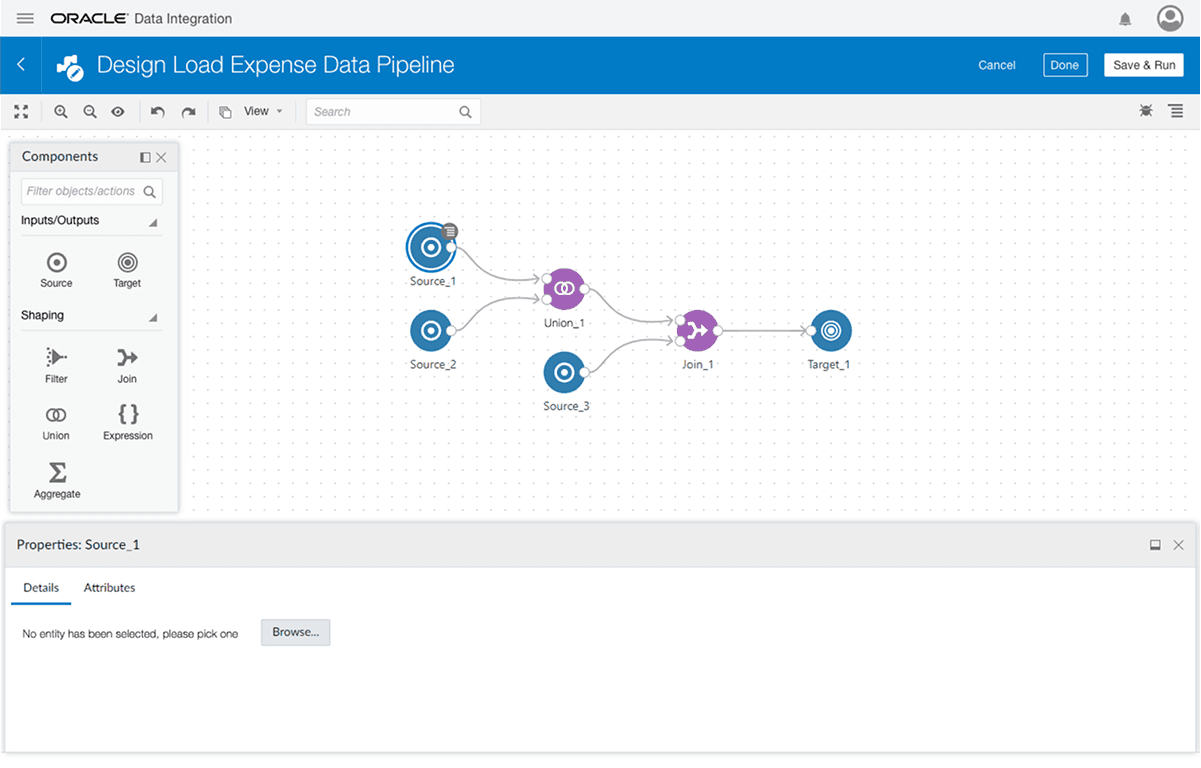
Pipelines were being built and modified correctly. Nobody could tell what they actually did, or what would break if something changed.
Overview
Oracle Cloud Infrastructure Data Integration occupied a structurally distinct role inside OCI. It was not simply a service for moving data. It was a control surface where operational intent, ownership boundaries, and downstream responsibility became explicit — or remained invisible — depending on how the experience was shaped.
OCI was in the middle of a broader shift away from isolated service configuration toward system-level comprehension. Services were increasingly understood as parts of operational systems rather than standalone tools. Within that shift, Data Integration became a leverage point. It was where cross-service data movement, orchestration, and dependency either surfaced clearly or were left implicit.
At the start of this work, Data Integration functioned primarily as a set of discrete configuration tasks. Operators could define sources, transformations, and targets, but the system did not provide a durable representation of the pipeline as an operational whole. Responsibility for understanding structure, execution order, and downstream impact lived largely in the operator’s head or in external artifacts.
In enterprise contexts, data movement is not a one-time setup activity. Pipelines evolve, span tools, and accumulate operational meaning as downstream systems change. In that environment, a configuration-first experience model creates hidden coupling. Dependencies and ownership relationships exist, but they are not surfaced in a way that supports shared understanding or durable system stewardship.
This case centers on a reframing of what Data Integration is responsible for expressing. The strategic shift was to treat Data Integration as an orchestration surface rather than a collection of setup screens. The goal was to make pipeline structure, dependency, and intent legible in the interface so operators could reason about systems, not just complete tasks.
That reframing carried platform-level implications. OCI relied on standardization and shared patterns to scale design and governance. At the same time, enterprise data workflows are structurally coupled and long-lived. Data Integration sat at the intersection of those forces. How it was framed determined whether operational coupling became visible and governable—or remained implicit and cognitively offloaded to individuals.
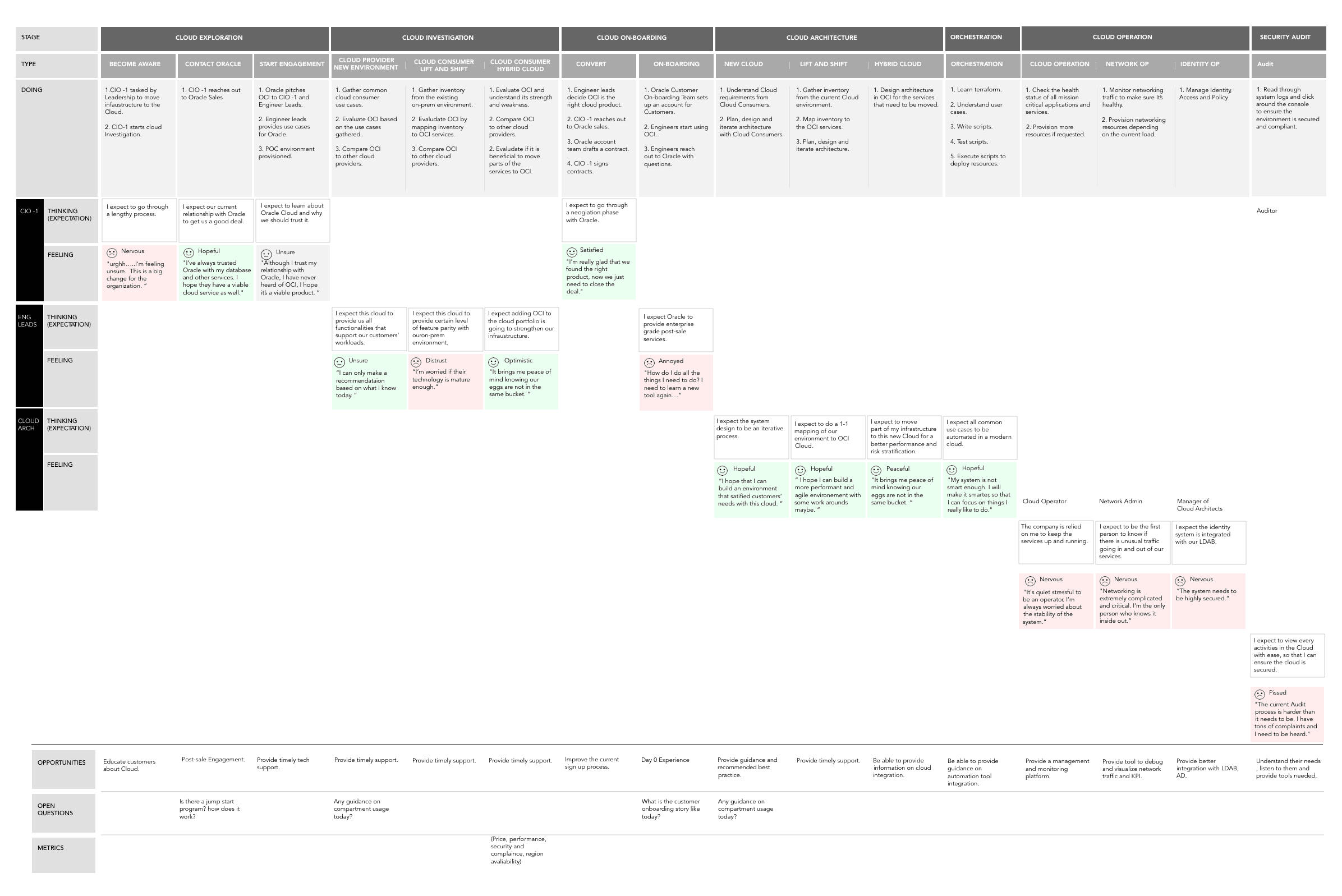
Internal journey map mapping orchestration, handoffs, and operational intent across the OCI ecosystem
COMPANY
ORACLE
2021
ROLE
Design Lead — Directed UX for cloud data integration platform, chaired UX Review Board, and guided Redwood Design adoption
EXPERTISE
UX leadership, information architecture, interaction design, prototyping, data integration, Redwood Design system
Context and System Constraints
Data Integration was built inside a platform governed by strong standardization rules. OCI depended on shared patterns, common navigation, and reusable service archetypes to scale design, simplify governance, and reduce cognitive switching across teams. Alignment with those standards was not optional. It directly affected review velocity, component reuse, and organizational trust.
At the same time, enterprise data workflows did not conform to a single-service model. Pipelines crossed tools, evolved over time, and accumulated operational meaning as downstream systems changed. Data movement was not a one-time setup event. It was a long-lived operational asset that required ongoing modification, validation, and stewardship.
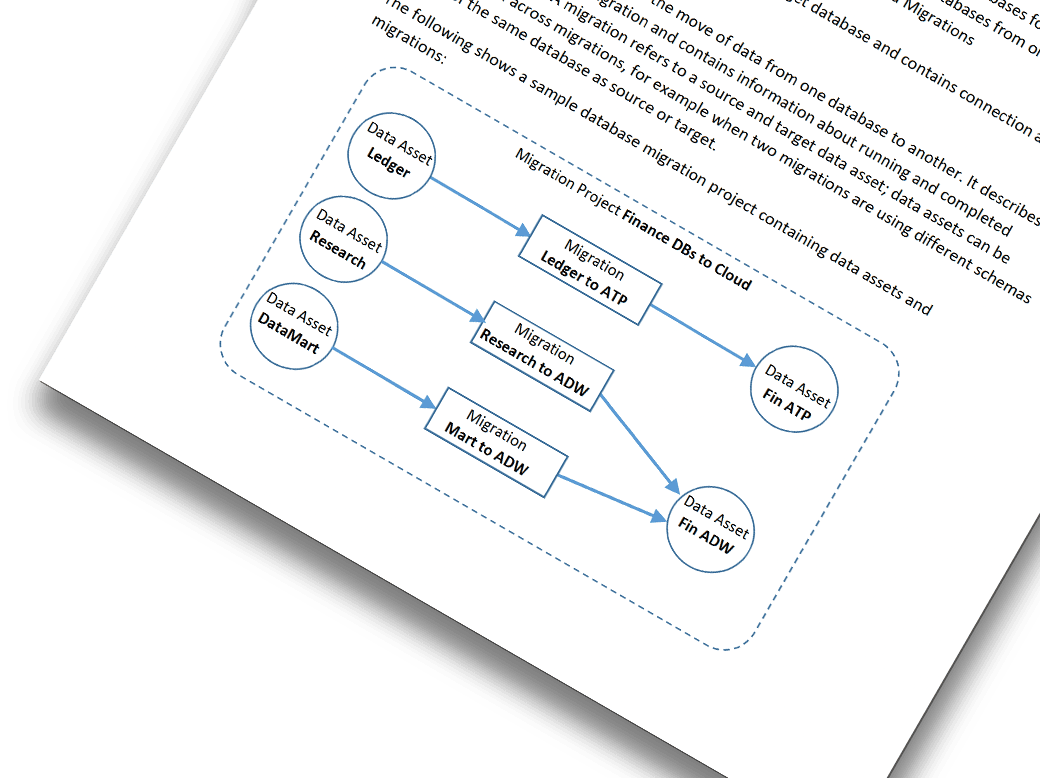
Documentation illustration showing database migration flows to Oracle Cloud Infrastructure
This created a structural mismatch. Platform rules optimized for consistency and predictability at the service level. Operational reality required expressiveness at the system level. Data Integration sat directly in that gap. Its value was expressed through orchestration, not isolated configuration, which meant its most important behaviors cut across the boundaries the platform was designed to enforce.
As a result, design decisions for Data Integration carried organizational weight. Deviations from platform patterns required justification. Reviews were not just about usability or visual alignment. They were about whether the service was allowed to express system-level structure in ways that other services were not.
The context for this work, therefore, was not simply a service redesign. It was a negotiation with platform rules. The team had to decide where to conform, where to diverge, and how to defend those choices in an organization optimized for standardization. This constraint shaped both what could be built and how much friction the team was willing to absorb in order to preserve operational legibility.
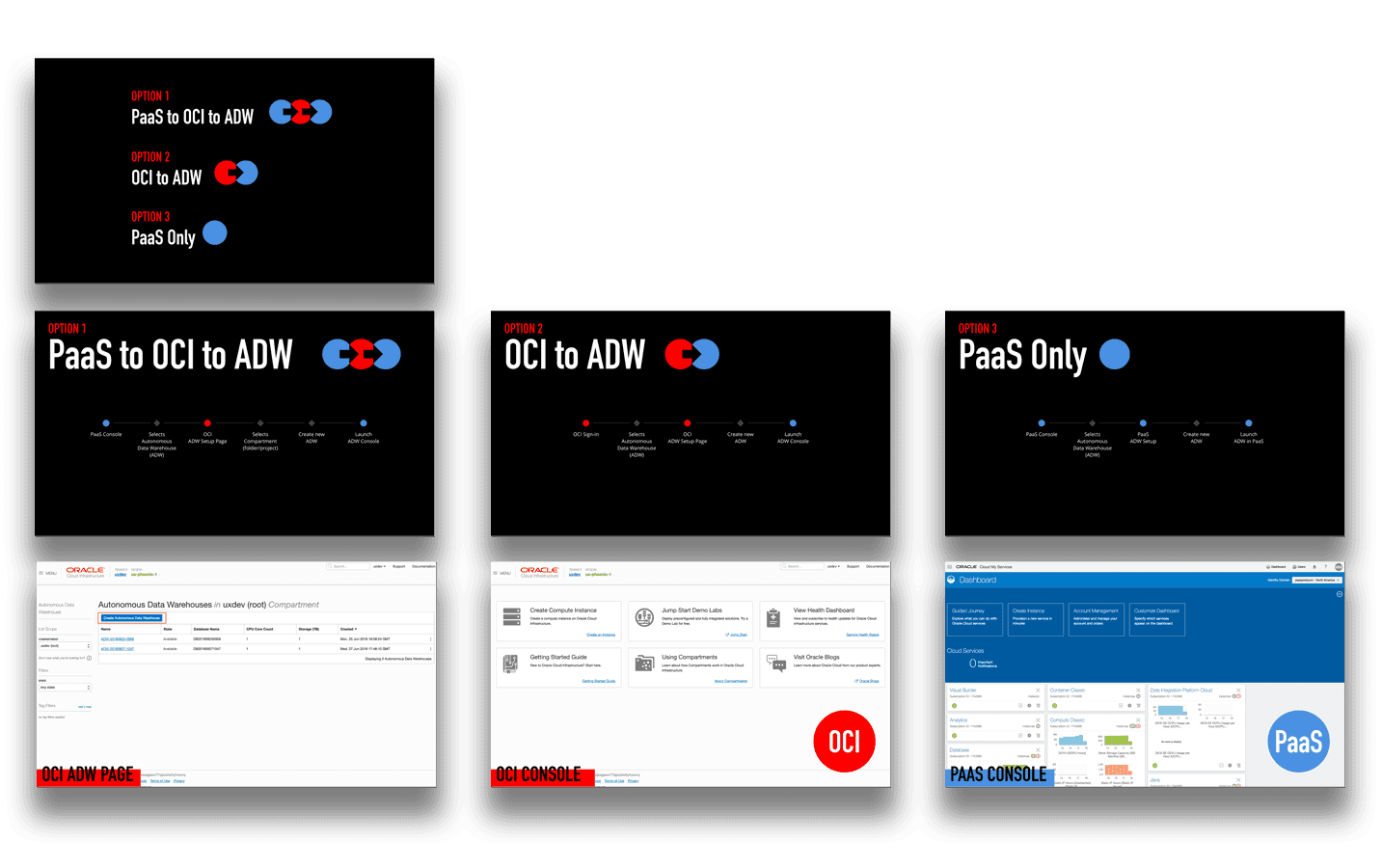
Internal study sample illustrating structural mismatches across the OCI ecosystem that informed Data Integration trade-offs
Problem Framing: Operational Legibility Failure
The primary failure was not that operators could not configure pipelines. It was that the system did not make it possible to understand what those pipelines meant as operational systems.
Configuration was distributed across multiple steps and surfaces. Each step was locally correct, but the system did not externalize how those steps composed into a durable, evolving workflow. Pipeline structure, execution order, and downstream impact were left implicit. As pipelines grew and changed, meaning accumulated outside the interface.
This created hidden operational work. Operators were forced to carry mental models of dependency and impact, often supplemented by external documentation, tribal knowledge, or ad hoc diagrams. Over time, the interface ceased to be the system of record for how data actually moved. People became the system of record.
This shift had concrete consequences. Changes that were technically valid could still be operationally wrong. Without a visible system model, small edits could propagate unintended effects downstream. Investigating failures required reconstructing intent after the fact, tracing backward through configuration history rather than inspecting a current, authoritative representation.
The problem, therefore, was not usability in the narrow sense. It was a breakdown in operational legibility. The system optimized for parameter correctness, not for making system structure, coupling, and responsibility visible. In an enterprise environment where pipelines are long-lived and shared, that invisibility became a risk multiplier.
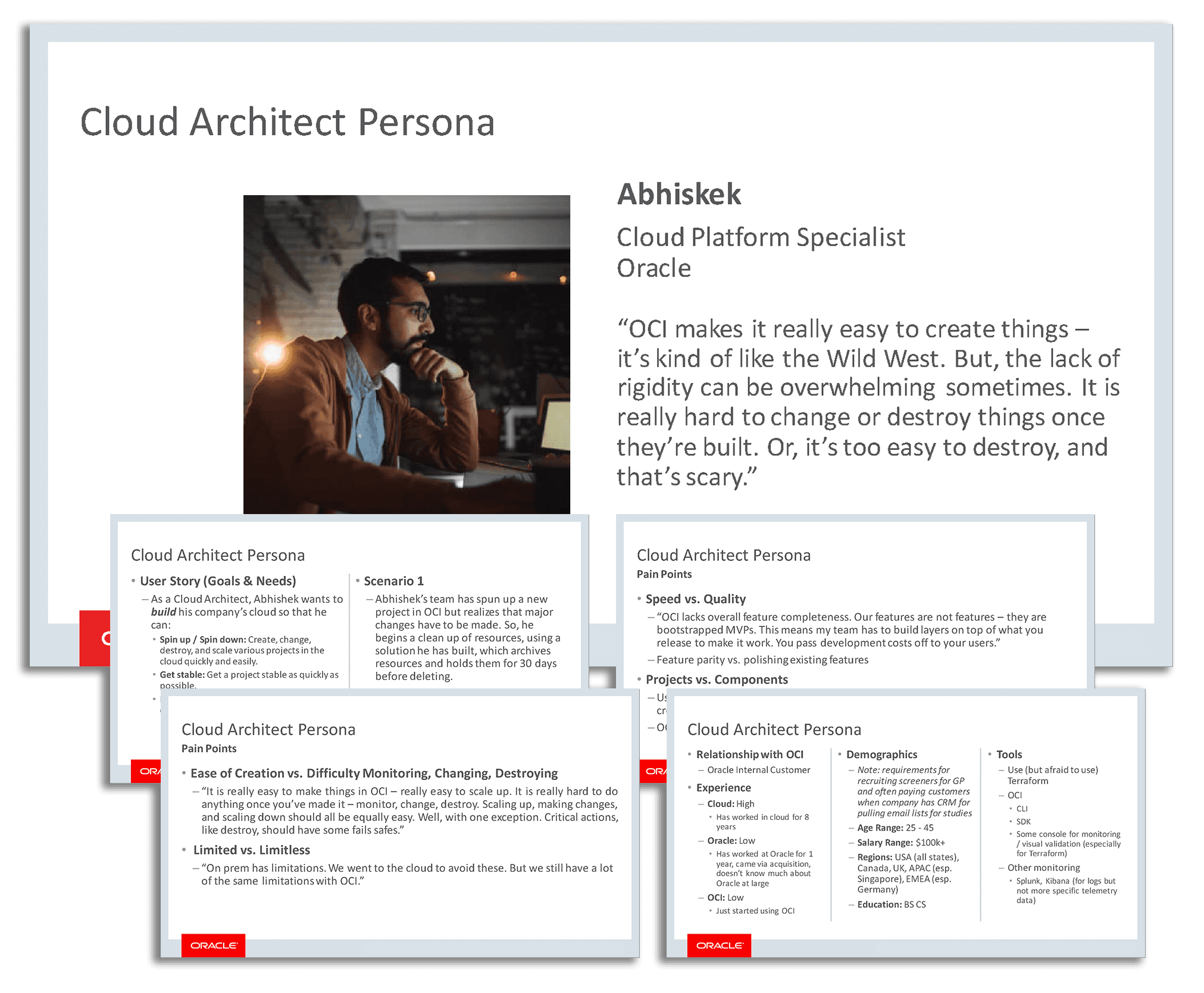
Internal study persona highlighting ecosystem-level operational legibility issues relevant to Data Integration, though not specific to its service design
Strategic Reframing: Orchestration as System of Record
The central strategic decision was to redefine what counted as the system of record for pipeline behavior.
Prior to this work, the system of record lived in configuration state and in the heads of experienced operators. The interface reflected parameters, not intent. Pipeline meaning was distributed across screens, documentation, and people.
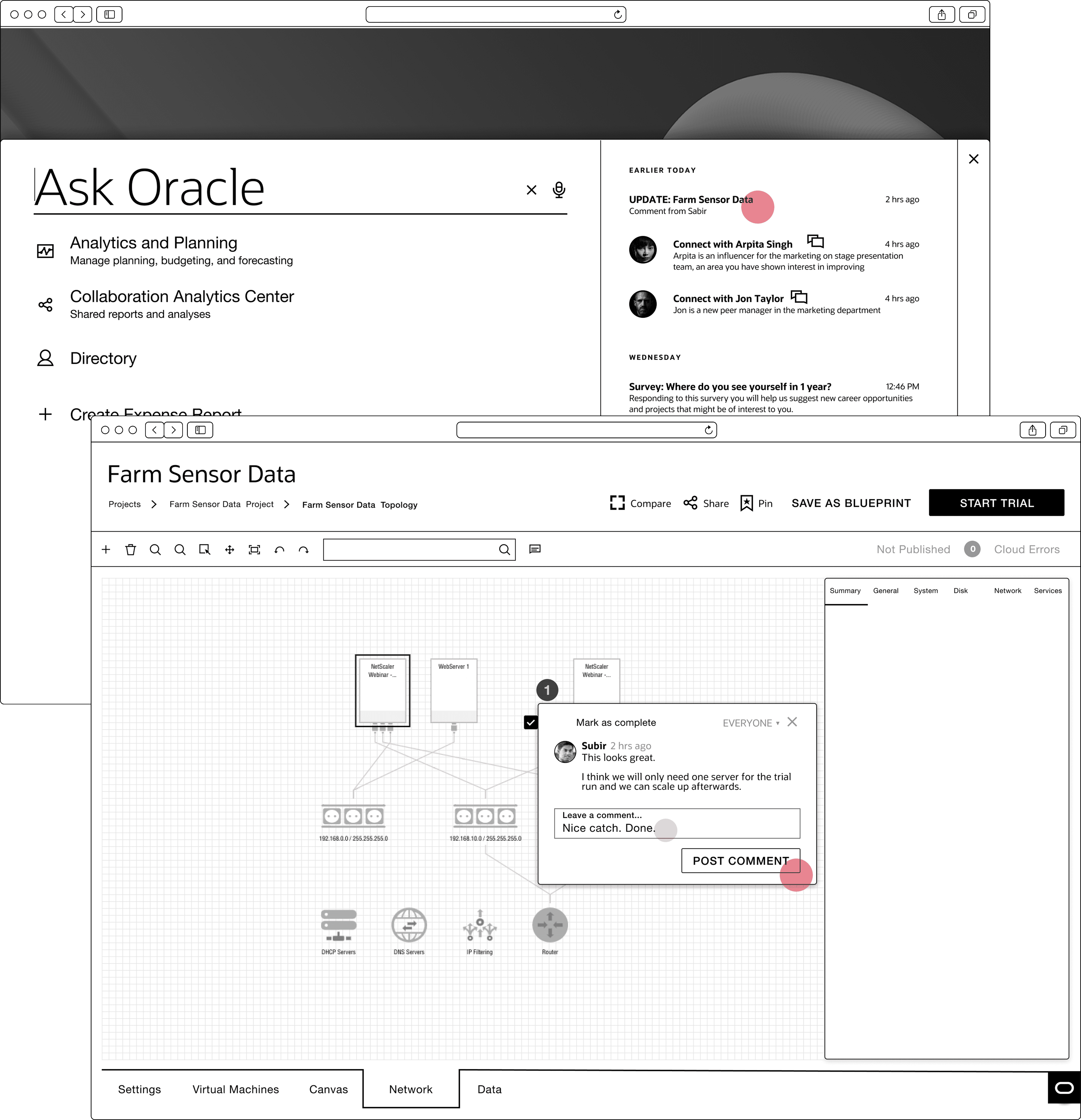
Cloud-native data integration concept showing pipeline canvas with collaborative review and cross-team activity context
The team made a deliberate shift: the orchestration surface would become the authoritative representation of pipeline structure and intent. This was not a visual enhancement. It was a governance decision. The system would no longer rely on human memory or external artifacts to explain how data moved. The interface itself would carry that responsibility.
This choice introduced immediate tension with platform norms. Platform patterns were optimized for services where behavior could be inferred from standardized forms and flows. Making orchestration explicit required surfaces that expressed sequence, dependency, and grouping in ways that did not map cleanly to existing service archetypes.
A rejected path was to modernize existing screens using Redwood components while preserving the configuration-first model. That approach would have reduced visual and technical debt but would have left the human system of record intact. The team chose instead to incur governance and review cost to elevate orchestration to a first-class system artifact.
This reframing changed the accountability boundary. Understanding pipeline behavior moved from being a personal responsibility to being a property of the system. The interface became the place where intent, structure, and downstream impact were expected to be legible and reviewable.
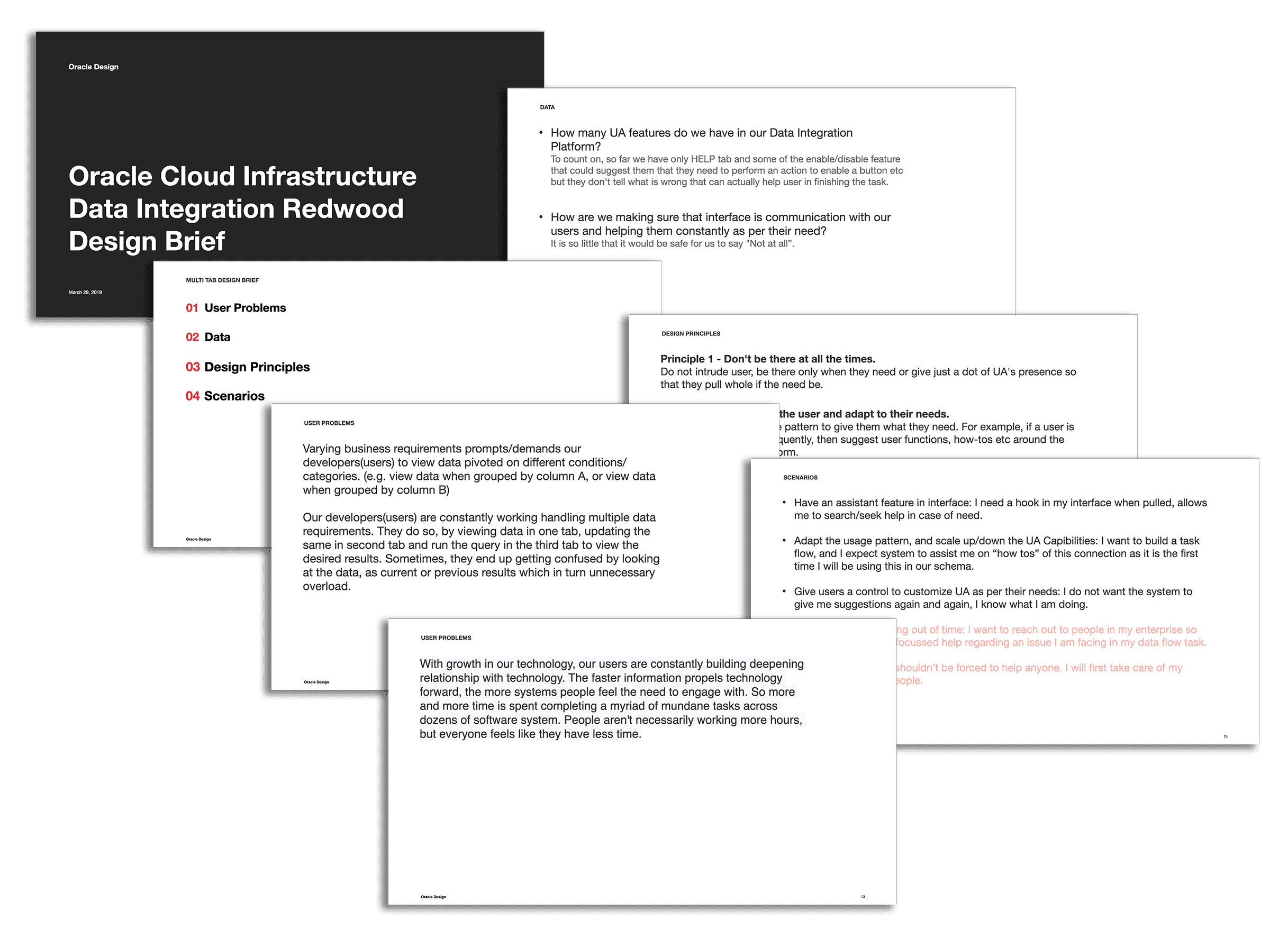
Internal design brief and principles that reframed orchestration as a first-class system surface, making pipeline structure, dependency, and operational meaning explicit.
Workflow Expressiveness as a Design Rule
Second Stratum — Prevented Failure Modes
A central risk in the original system was silent structural breakage.
Pipelines could be modified in ways that preserved syntactic correctness while breaking semantic intent. Operators could add, remove, or reorder steps without the system making downstream consequences legible. Failures often surfaced later, during execution or data validation, far removed from the point of change.
The team enforced a rule: structural changes had to be visible and reviewable at the moment they were made. This meant surfacing dependency chains, grouping, and execution order directly in the orchestration surface. The goal was not error prevention through validation alone, but harm prevention through comprehension.
This rule blocked a class of failures where configuration changes appeared safe in isolation but broke downstream consumers or expectations. It also changed review behavior. Instead of reviewing parameters, teams could review structure.
An alternative approach was to rely on post-change validation, logs, and monitoring to catch errors. That approach would have preserved simpler configuration flows but would have accepted delayed failure discovery. The team rejected that model in favor of preventing structural harm at the moment of change.
This was a deliberate system safety decision. The cost was higher upfront cognitive load. The benefit was fewer latent failures and less reliance on tribal knowledge to detect unintended consequences.
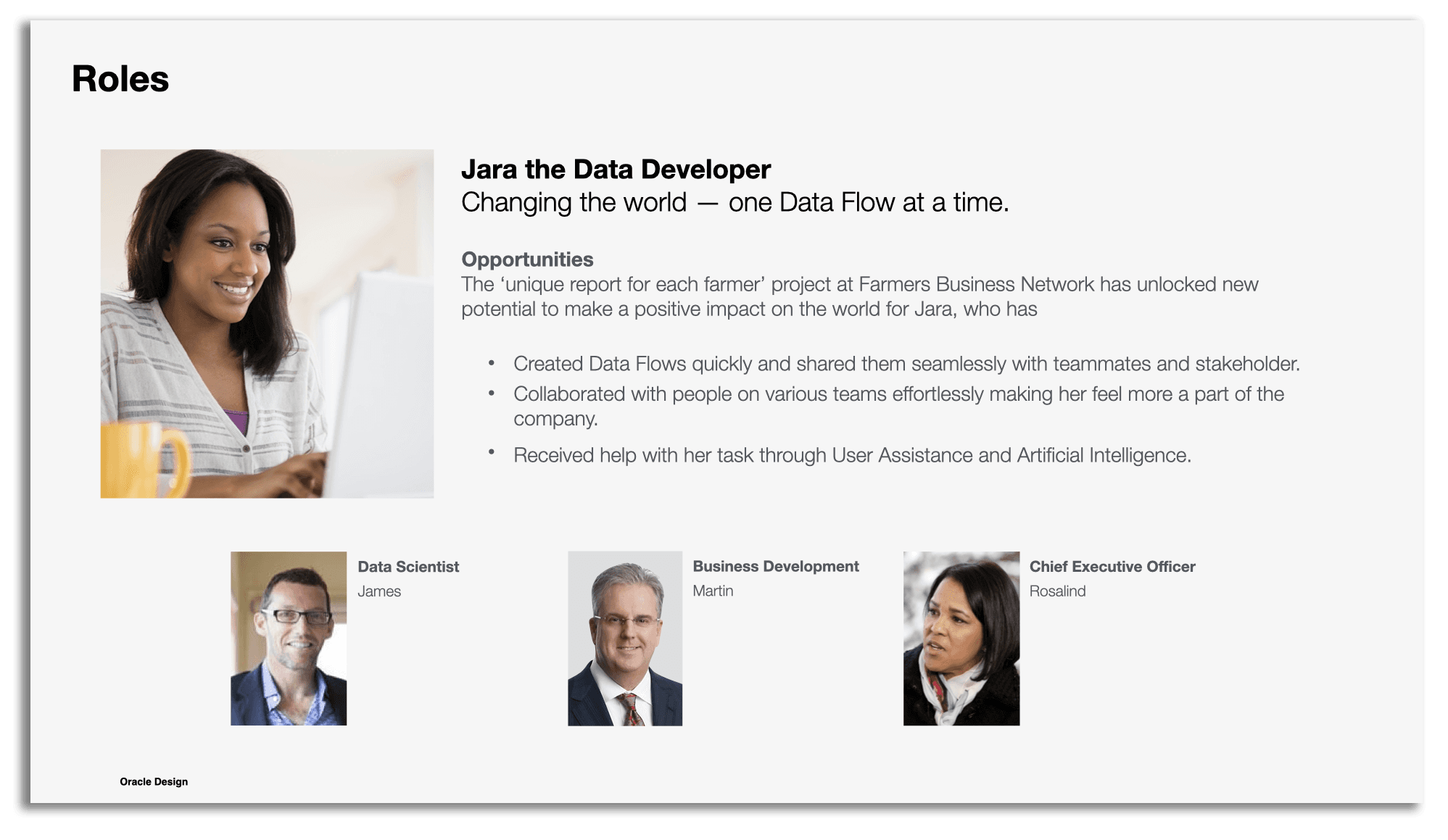
Personas used to frame Data Integration as a cross-service connective layer — a role that introduced governance tension by spanning platform boundaries.
Organizational Tension and Platform Governance
The hardest part of this work was not designing the orchestration surface. It was securing organizational permission for it to exist.
OCI’s governance model prioritized standardization. Platform teams needed predictable service archetypes to scale reviews, reuse components, and maintain coherence across a rapidly expanding catalog. A service that required non-standard expressive surfaces created governance drag and raised questions about precedent: if Data Integration could deviate, other services would ask to deviate as well.
Data Integration created a specific tension because its value was expressed across boundaries the platform was designed to enforce. Platform norms treated services as discrete units with consistent surfaces. Data Integration operated as a connective layer whose most important behavior was cross-service coupling and long-lived workflow evolution.
This produced recurring negotiation pressure. The team had to decide what to conform to without compromising workflow expressiveness. In practice, this meant separating what was negotiable—navigation patterns, layout conventions, component usage—from what was not negotiable: the visibility of structure, dependency, and intent.
A key judgment call was to treat workflow expressiveness as a platform health issue rather than a service preference. The argument was not "this is nicer." It was "this reduces hidden coupling and prevents operational harm." That framing shifted the conversation from design taste to system accountability, which made it defensible inside a standardization-driven organization.
Rejected Paths
Several alternative directions would have reduced organizational friction and short-term delivery risk. Each was explicitly considered because they aligned more closely with existing platform norms.
Three alternative directions were explicitly considered and set aside.
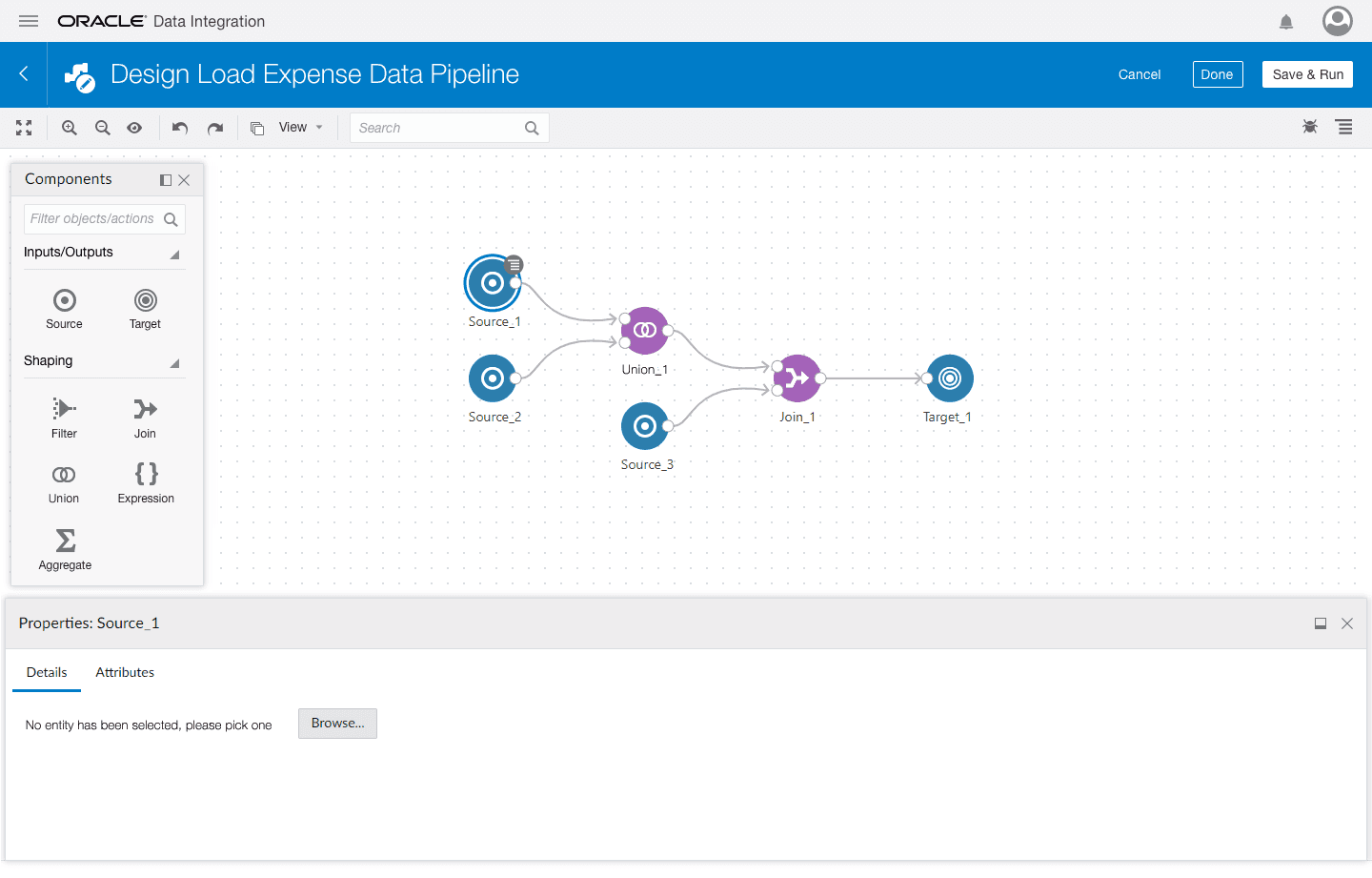
Pipeline designed using existing Oracle Cloud Infrastructure design patterns and templates
The first was a linear, wizard-style flow built entirely from standard Redwood form patterns. It would have made the service easier to certify and faster to ship. It would also have preserved the existing model where structural understanding was distributed across steps, logs, and documentation — which was the problem the work was trying to solve.
The second kept orchestration implicit, exposing structure only through read-only visualizations layered on top of configuration. Operators would configure through traditional forms and view structure in a separate, non-authoritative surface. The team rejected this because it created a split-system-of-record: configuration for action, visualization for understanding, with no clear authority when the two diverged.
The third forced Data Integration into a generic service template, even where orchestration concepts did not map cleanly to it. This would have reduced exception handling and precedent risk. It would also have encoded a mismatch between how the system actually behaved and how it was represented — increasing cognitive and operational debt over time.
Across all three, the pattern was the same: system truth over organizational convenience. This would have reduced exception handling and precedent risk. The team rejected this because it would have encoded a mismatch between how the system actually behaved and how it was represented, increasing long-term cognitive and operational debt.
These rejections established a pattern: the team consistently chose system truth over organizational convenience. That choice increased short-term friction but reduced long-term ambiguity and operational risk.
Strategic vs Tactical Decisions
Not every decision in this work carried the same weight. A key part of senior judgment was distinguishing between decisions that changed how the organization would operate and decisions that optimized within an already-chosen frame.
At the strategic level, the most consequential move was redefining orchestration as a system-of-record concern rather than a configuration convenience. That choice reshaped governance conversations, platform negotiations, and how downstream teams reasoned about ownership and accountability.
At the tactical level, many decisions focused on how that strategy could be made workable inside OCI constraints: adapting Redwood components for higher-density layouts, aligning navigation patterns to the global shell, and sequencing feature delivery to reduce review friction. These were not cosmetic decisions, but they did not change the fundamental model of the system.
This separation mattered organizationally. Strategic decisions required cross-team alignment and justification in terms of platform health and operational risk. Tactical decisions were framed in terms of usability, consistency, and delivery efficiency. Treating them as equivalent would have diluted the system argument and turned platform negotiation into a series of localized design debates.
One practical effect was that some compromises were intentionally accepted. The team allowed certain Redwood conventions to shape layout and interaction even when they were not ideal for expressing structure, in order to preserve organizational trust and avoid blocking release. The system model was protected. Compromise on surface details — layout conventions, navigation patterns, component usage — was the price for preserving the model where it mattered.
Results and System-Level Impact
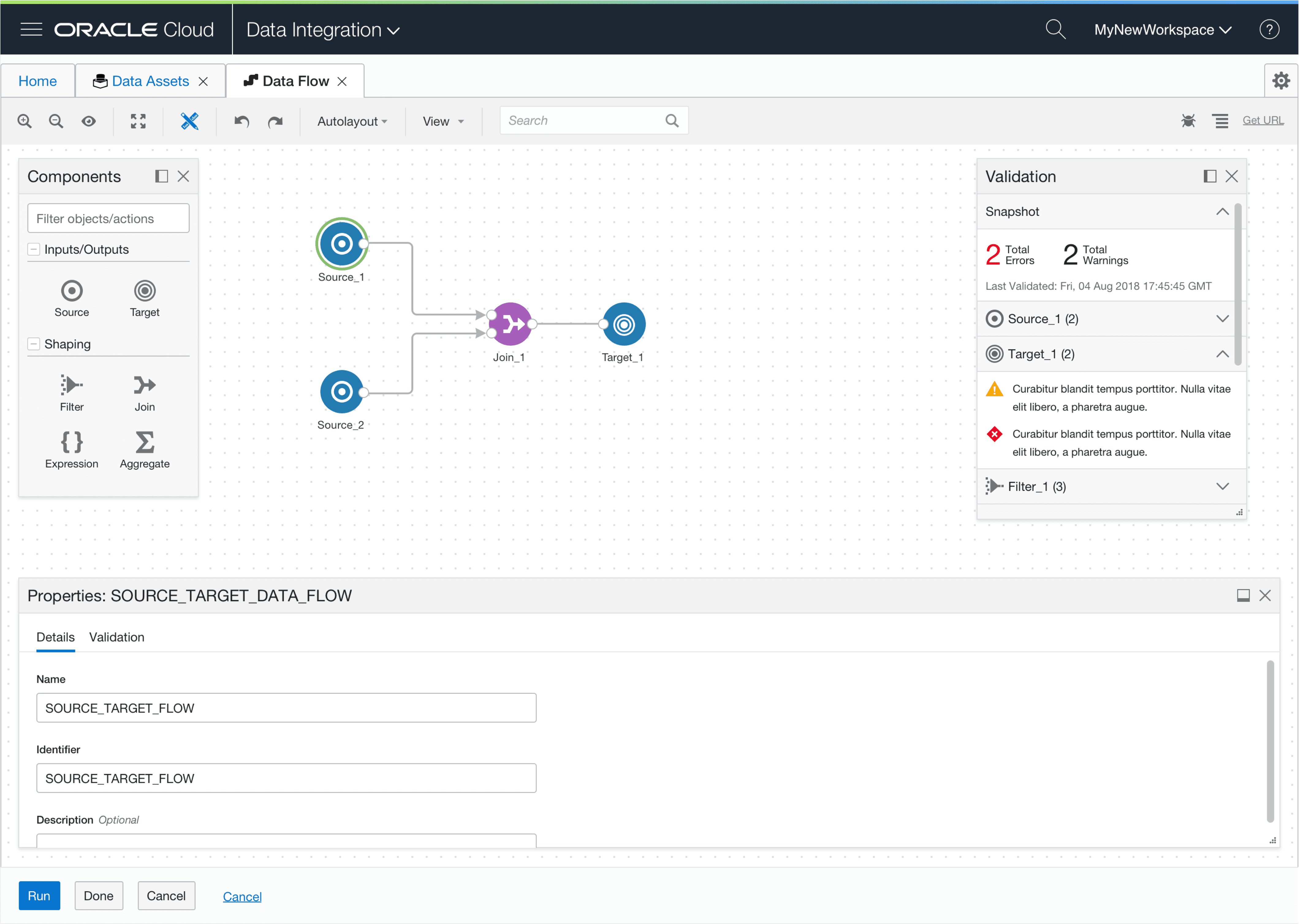
Visual orchestration surface representing pipeline structure, dependencies, and downstream impact
The most durable outcome was not a feature launch. Teams gained a shared artifact for reasoning about pipeline change — a representation of structure and dependency that could be referenced in reviews rather than reconstructed from memory.
By making orchestration structure visible and authoritative, teams gained a shared artifact for reasoning about change. Reviews could reference pipeline shape rather than reconstruct intent from parameters. This reduced reliance on individual operator memory and lowered the coordination cost of understanding complex flows.
This also changed how downstream impact was surfaced. When structure and dependency were visible, teams could identify coupling earlier. The system made it easier to anticipate where changes would propagate, which reduced late-stage surprises and firefighting.
The trade-off was increased upfront cognitive load. The orchestration surface demanded more from operators at the moment of change. The organization accepted that cost in exchange for fewer latent failures and less dependence on tribal knowledge to maintain correctness.
What did not change was platform velocity pressure. The team still operated inside aggressive delivery timelines and review cycles. The impact was not that work became easier, but that the system carried more of the cognitive burden that had previously lived in people and documentation.