Case Study:
Opportunity Marketplace
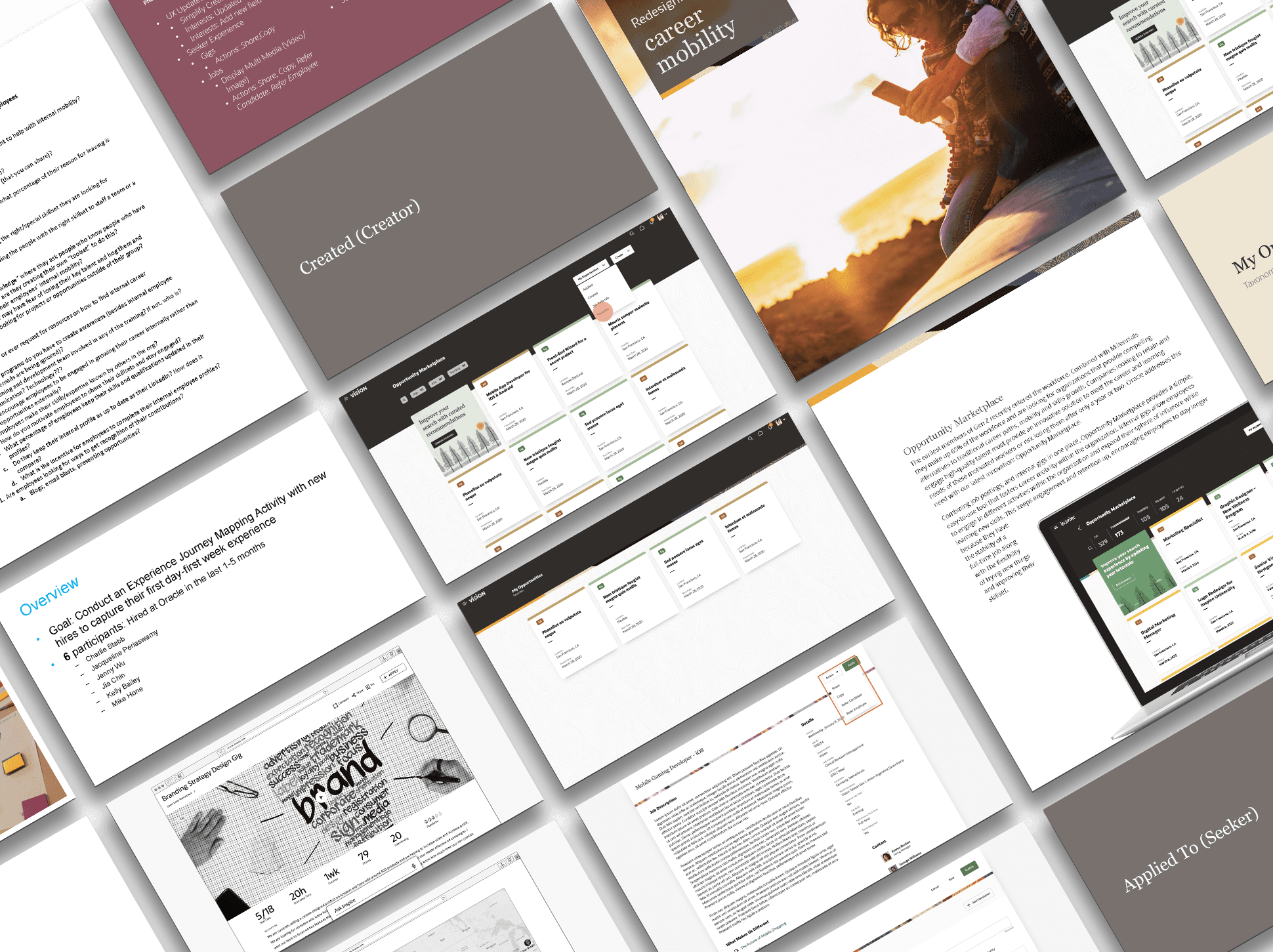
Outcomes & System Effects
Showing gig opportunities in direct context with a user’s goals
COMPANY
ORACLE
2019
ROLE
DESIGN LEAD — PARTNERED WITH PM/ML TEAMS TO DELIVER AI-POWERED INTERNAL MOBILITY MATCHING SYSTEM
EXPERTISE
UX STRATEGY, INTERACTION DESIGN, PROTOTYPING, DESIGN SYSTEMS, AI/ML, INTERNAL MOBILITY
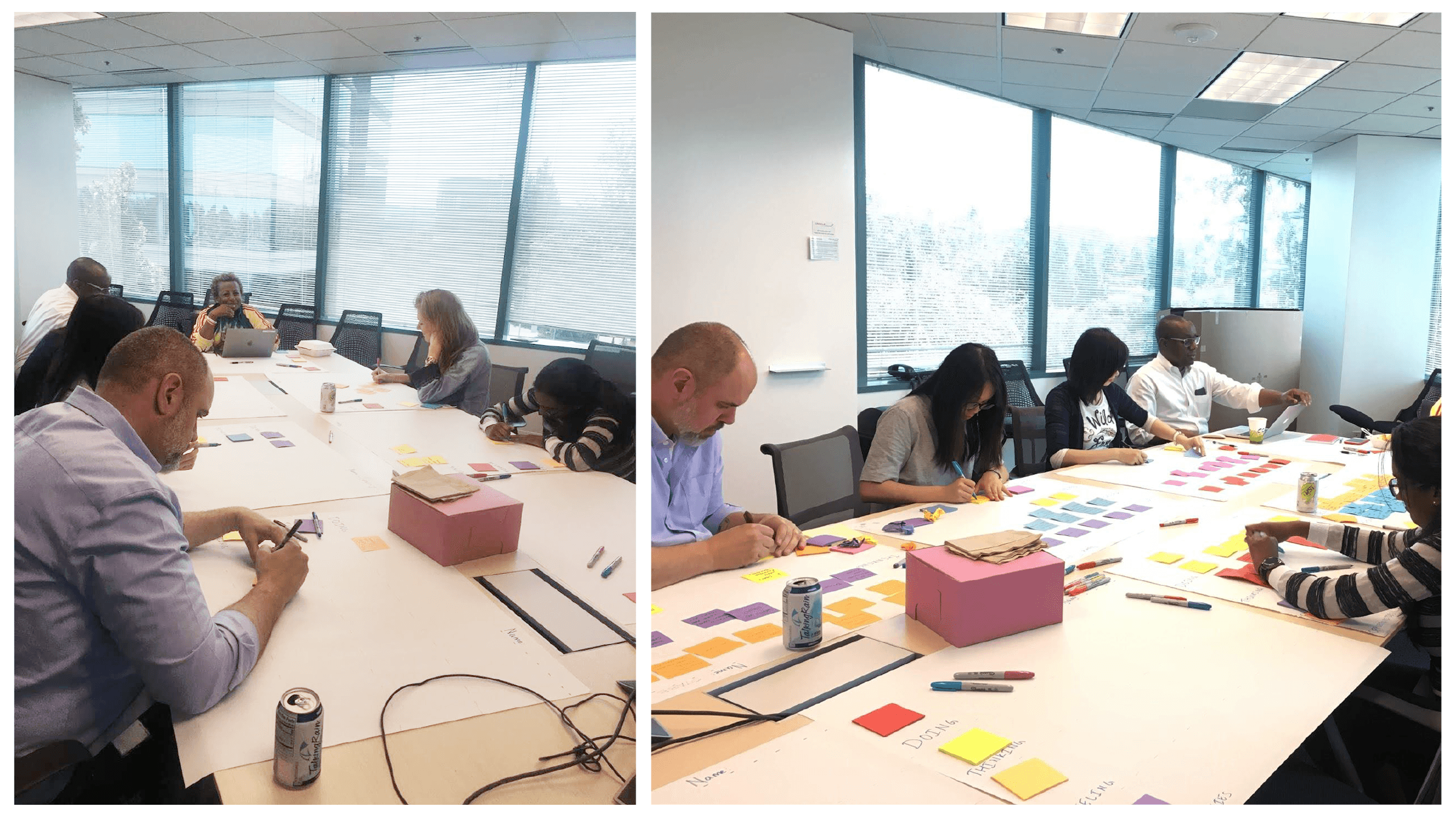
Internal mobility new hire journey mapping session with the usability engineering team
Design Strategy & Decision Pressure
The central design problem was not how to list opportunities. It was how to make participation feel safe inside a performance-driven organization.
Early concepts leaned toward a unified marketplace where jobs, gigs, and development opportunities appeared in a single surface. On paper, this simplified navigation and aligned with standard Human Capital Management patterns. In practice, it collapsed very different psychological contracts into a single decision moment. A job application is a career signal. A gig is an exploration signal. Treating them as equivalent created friction and avoidance.
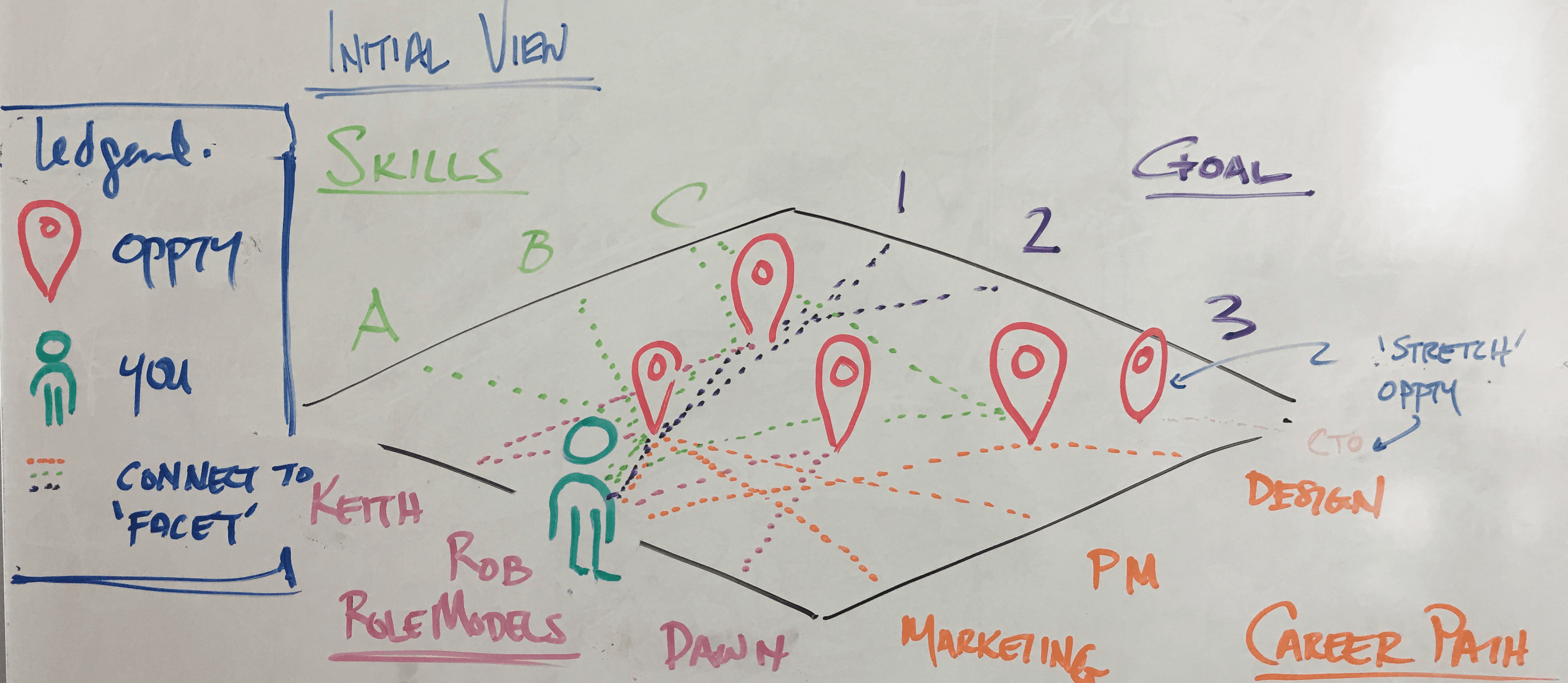
Showing gig opportunities in direct context with a user’s goals — so available work feels aligned, not random
The team rejected the unified model in favor of deliberate separation between gigs and jobs. This was not a visual preference. It was a system-level rule: different risk profiles required different interaction contracts. The separation allowed the product to encode intent — exploration versus transition — directly into the experience.
This decision created immediate tension with reporting and governance stakeholders. A single marketplace would have simplified metrics, dashboards, and executive rollups. Separate surfaces complicated measurement and reduced apparent throughput. The design choice prioritized behavioral truth over reporting convenience.
A secondary pressure point was filtering and discovery. Stakeholders pushed for aggressive, enterprise-grade filtering to support compliance, leveling, and role equivalency. The design team constrained filtering intentionally. Over-filtering optimized for precision but degraded scannability and increased cognitive load, especially for exploratory use cases. The product biased toward progressive disclosure: broad discovery first, constraint later.
This was a strategic choice, not an oversight. The system was designed to favor possibility over optimization. The cost was ambiguity. The benefit was participation.
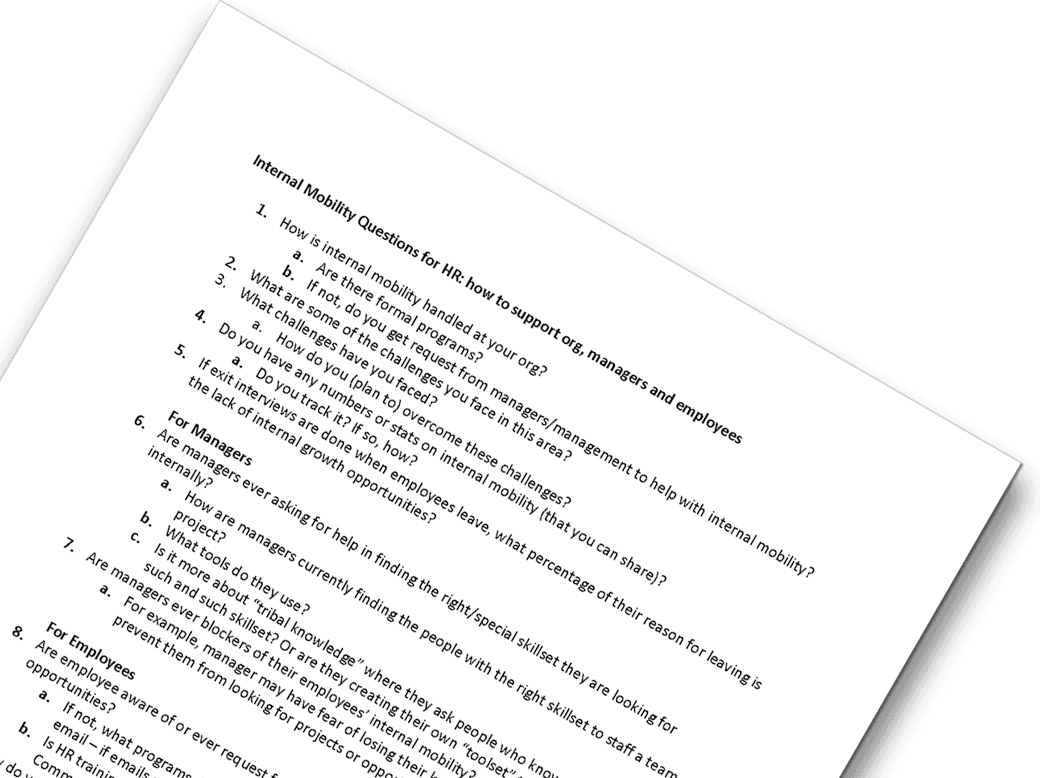
Internal Mobility interview questionnaire sample
Stakeholder & Organizational Dynamics
The most persistent resistance did not come from usability concerns. It came from organizational accountability.
Managers and Human Capital Management administrators raised repeated concerns about loss of control: visibility into who was applying, how participation would be interpreted, and whether internal mobility would destabilize team planning. These concerns were not theoretical. Existing internal job tools had already trained leaders to treat applications as intent to leave.
This created a structural conflict. The product was attempting to normalize exploration, while management systems were optimized to detect and manage attrition risk. The team navigated this by reframing internal mobility away from vacancy replacement and toward capacity sharing. Gigs were positioned not as exits, but as sanctioned extensions of work.
This reframing required negotiation, not just design. In multiple reviews, leadership requested stricter approval gates and manager notifications earlier in the process. The team resisted front-loading these controls. Instead, approvals were delayed until meaningful commitment points, preserving psychological safety while still satisfying governance requirements.
This was a tactical compromise with strategic consequences. By moving approvals later, the system absorbed organizational anxiety while protecting early-stage exploration. The result was a system that complied with enterprise controls without importing enterprise fear into the first click.
The interpersonal dynamic here mattered. The design team was not simply shipping flows. They were mediating between executive demand for predictability and employee need for plausible deniability during exploration. The product encoded this negotiation into its structure.
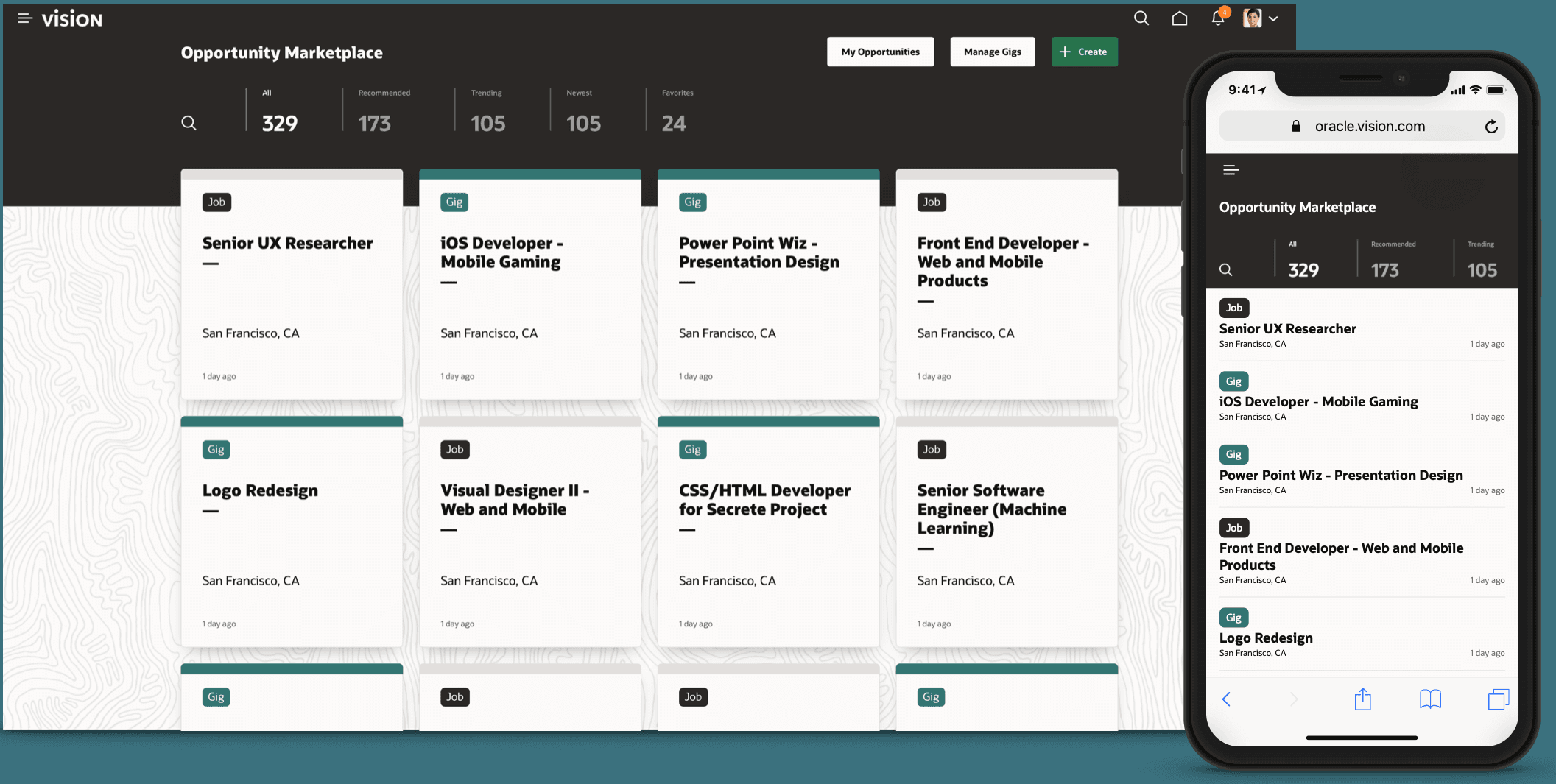
Filtering user interface pattern that encouraged browsing
Execution & Tactical Design Decisions
Once the strategic separation between gigs and jobs was established, the execution risk shifted from positioning to operability.
A recurring tactical pressure was to standardize Opportunity Marketplace on existing Human Capital Management form patterns. These patterns optimized for completeness, approvals, and auditability. They were also dense, slow, and cognitively heavy. Applying them wholesale would have satisfied platform consistency while undermining the lightweight intent of gigs.
The team rejected full form parity. Instead, gig creation and expression of interest were deliberately constrained to smaller, narrative-oriented inputs. This reduced configuration flexibility for administrators, but it lowered activation energy for employees. The trade-off was explicit: fewer enterprise knobs in exchange for higher behavioral throughput.
Filtering was another execution pressure point. Product management pushed for role-level equivalency, grade matching, and compliance-oriented filters to mirror internal job search. The team limited early filter depth and prioritized scannability. Long filter lists optimized for correctness; they degraded discovery.
This resulted in a non-standard pattern for an enterprise product: the default state favored browsing over narrowing. Precision was available, but it was not the first interaction. This was a conscious inversion of typical Human Capital Management optimization logic.
The rejected path here was full parity with job infrastructure. It would have reduced engineering and documentation burden. It also would have turned gigs into lightweight-looking versions of heavyweight processes. The team chose behavioral integrity over platform convenience.

Internal mobility new hire journey mapping session with the usability engineering team
Behavioral Outcomes & What Changed
The design decisions altered not just the interface, but the behavior the system made plausible.
By separating gigs from jobs and delaying high-friction approvals, the product created a space where employees could explore without triggering immediate managerial interpretation. This shifted the first interaction from a declaration of intent to a low-commitment signal of curiosity. In practice, this made the marketplace usable by people who would never have applied for an internal role.
The browse-first, low-density discovery model also changed how people scanned opportunities. Instead of entering with a specific role target, employees encountered adjacent work they would not have actively searched for. This increased lateral movement — not measured only as transfers, but as exposure to projects, teams, and skills outside of formal job ladders.
From an organizational perspective, this created tension in how success was evaluated. Traditional Human Capital Management metrics prioritize filled roles and time-to-hire. The Opportunity Marketplace introduced softer outcomes: participation, exploration, and partial engagement. These outcomes were harder to quantify, and in some reviews, were discounted as “noise” rather than signal.
This was an intentional trade. The system optimized for long-term internal mobility health over short-term reporting clarity. Because the product favored exploration, it reduced the pressure for every interaction to resolve into a formal job move. The behavioral win was optionality. The reporting cost was ambiguity.
The causal chain was direct: lower-friction participation increased exploration; increased exploration surfaced value that standard HCM metrics — filled roles, time-to-hire — were not designed to capture.
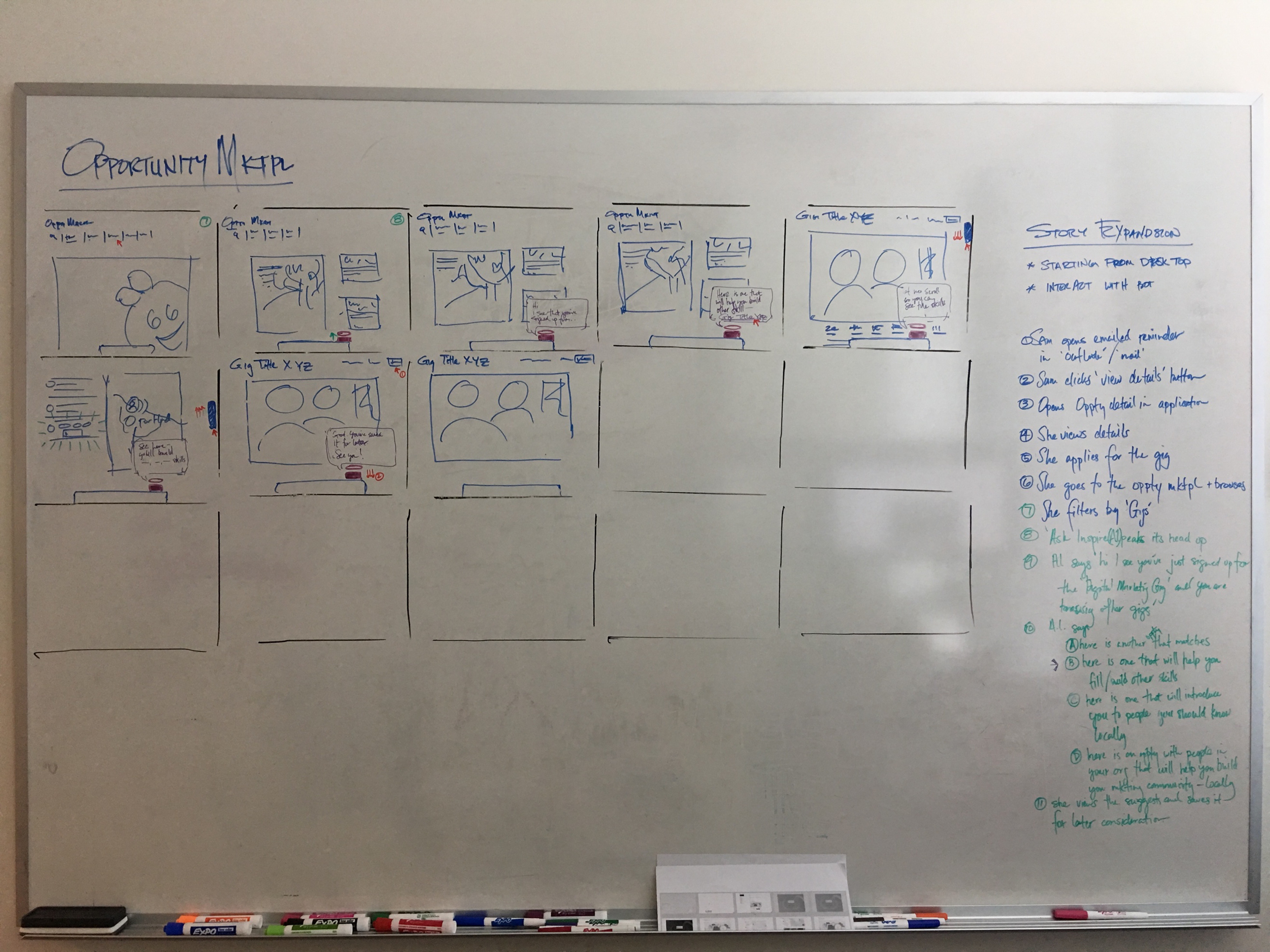
Sample from storyboard with developmental language that lowered resistance compared to role-change framing.
Second Stratum — What Would Have Broken
One failure mode the team actively designed against was collapsing gigs and jobs into a single, undifferentiated application pathway.
If that had shipped, exploratory participation would have been structurally punished. Employees would have been forced to declare intent too early, triggering managerial interpretation and reducing experimentation. The system would have optimized for formal mobility at the cost of informal learning and capacity sharing.
This risk was not hypothetical. Prior internal job tooling had already demonstrated how early visibility suppressed exploration. The team enforced a rule: early exploration must remain plausibly deniable. Violating that rule would have preserved governance simplicity while destroying behavioral safety.
This constraint limited how much the team could reuse existing infrastructure. It also prevented a class of silent failure — a feature that passed QA and went unused.
Strategic Impact & What This Case Demonstrates
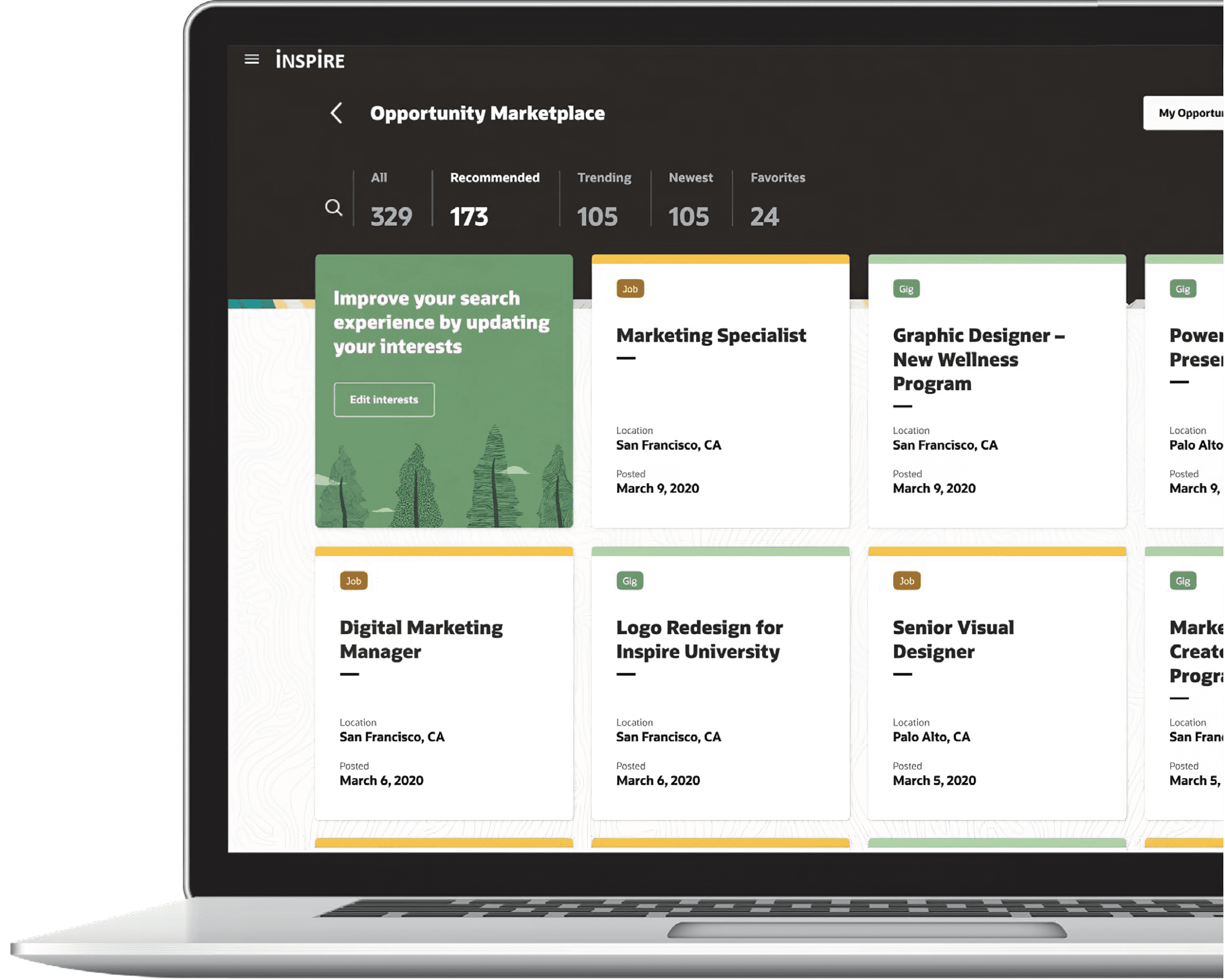
What’s New in Oracle HCM Cloud – 2020 Spring
This work was not primarily a marketplace design problem. It was an organizational behavior problem disguised as a feature.
The core judgment in this case was choosing to design for human risk tolerance inside an enterprise system that is structurally optimized for control. The product could have shipped faster, reported cleaner numbers, and aligned more closely with existing Human Capital Management infrastructure by standardizing on job workflows, filters, and approvals. That path was available. It was rejected.
Instead, the team chose to encode a second behavioral contract into the platform: exploration without immediate consequence. This required violating several default enterprise assumptions — uniform workflows, early approvals, and metric-first optimization. These were not neutral design choices. They were deliberate bets on how internal mobility actually works in practice, not how organizations prefer to measure it.
The system-level impact was creating two parallel modes of participation inside the same platform: one optimized for transition, and one optimized for discovery. That duality is difficult to maintain in enterprise software, because it complicates governance, reporting, and consistency. The team accepted that complexity in order to preserve behavioral integrity.
At a leadership level, this case demonstrates a willingness to trade local optimization for systemic health. The design choices prioritized long-term talent circulation over short-term role fill efficiency. The product did not just make internal mobility visible. It made it safer.
The strategic signal here is not about interface craft. It is about when to hold a position against platform defaults. The decisions that mattered most in this project were not visual — they were about which enterprise assumptions the product would import and which ones it had to break to be usable by actual people inside the organization.
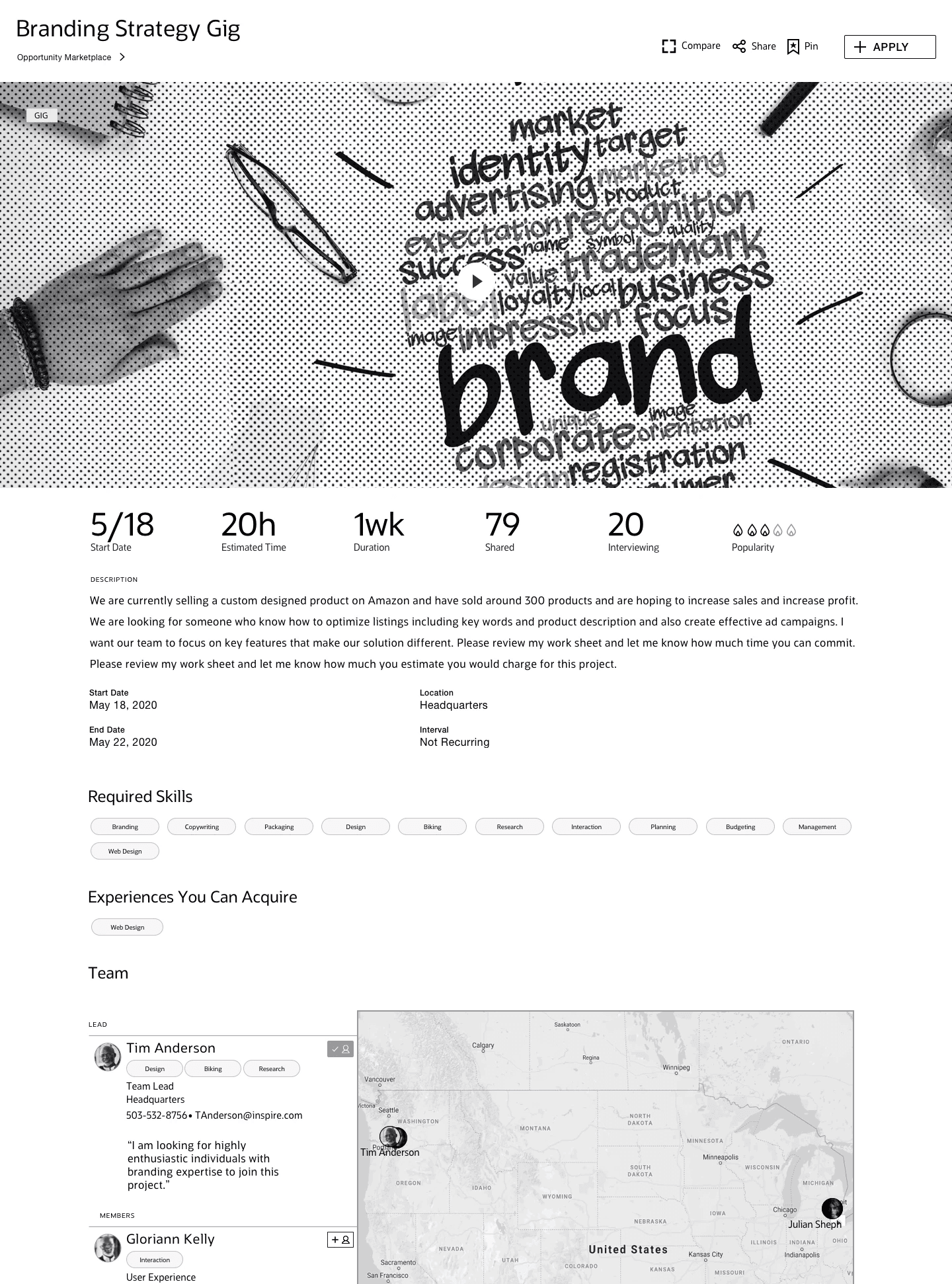
An early Opportunity Marketplace Gig concept